
If you love sewing, DIY projects, or just hoarding “useful someday” fabric (no judgment here 🙋♀️), you already know one thing—fabric chaos is real. One minute everything is folded neatly, and the next minute you’re knee-deep in cotton scraps, wondering where that perfect floral print disappeared.
The good news? Smart fabric storage doesn’t require a huge craft room or expensive organizers. With the right ideas, even the smallest corner of your home can turn into an organized, inspiring fabric haven. Whether you’re storing full bolts, fat quarters, or leftover scraps, a little system goes a long way in saving time, space, and your sanity.
In this post, I’m sharing practical, aesthetic, and totally doable fabric storage ideas that work for real homes—not Pinterest-perfect studios. These ideas will help you see what you own, protect your fabrics, and actually enjoy pulling them out for your next project.
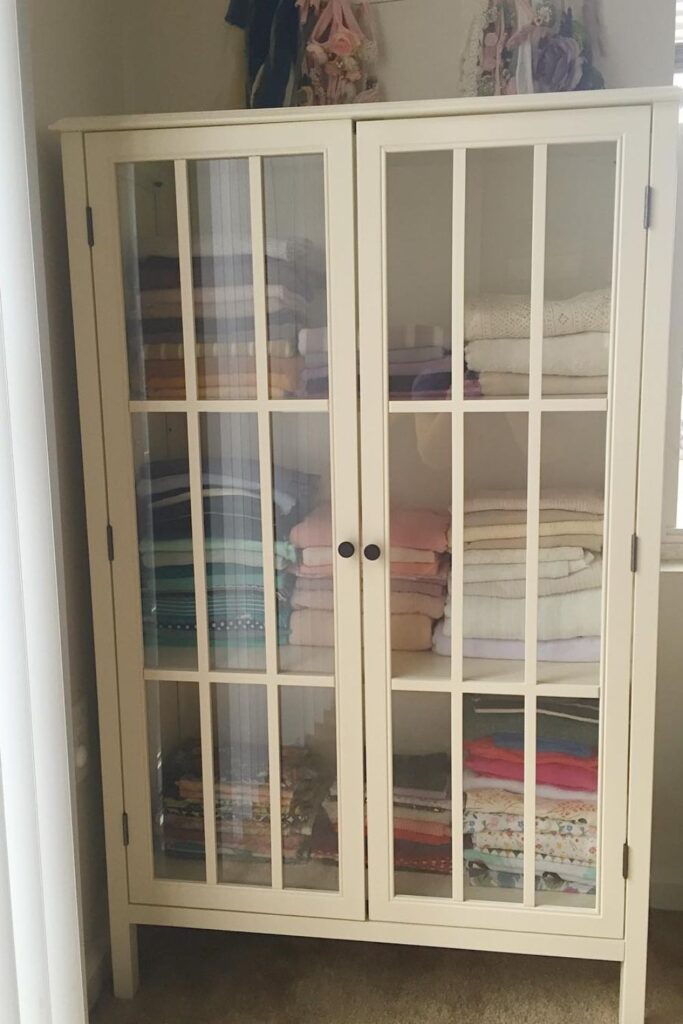
Glass-Front Cabinet Fabric Storage
 credit: @goldenstitchprops
A glass-front cabinet is one of those fabric storage ideas that feels equal parts practical and pretty. At first glance, it looks like furniture you’d put in a dining room or hallway, but open the doors and it quietly turns into a fabric lover’s dream. The biggest advantage here is visibility. You can see your entire fabric collection without opening a single drawer, which saves time and prevents that classic “I forgot I owned this” problem.
In this setup, fabrics are neatly folded and stacked by color or type, creating a soft rainbow effect behind the glass panels. The glass doors protect your fabrics from dust while still letting natural light bounce around the room.
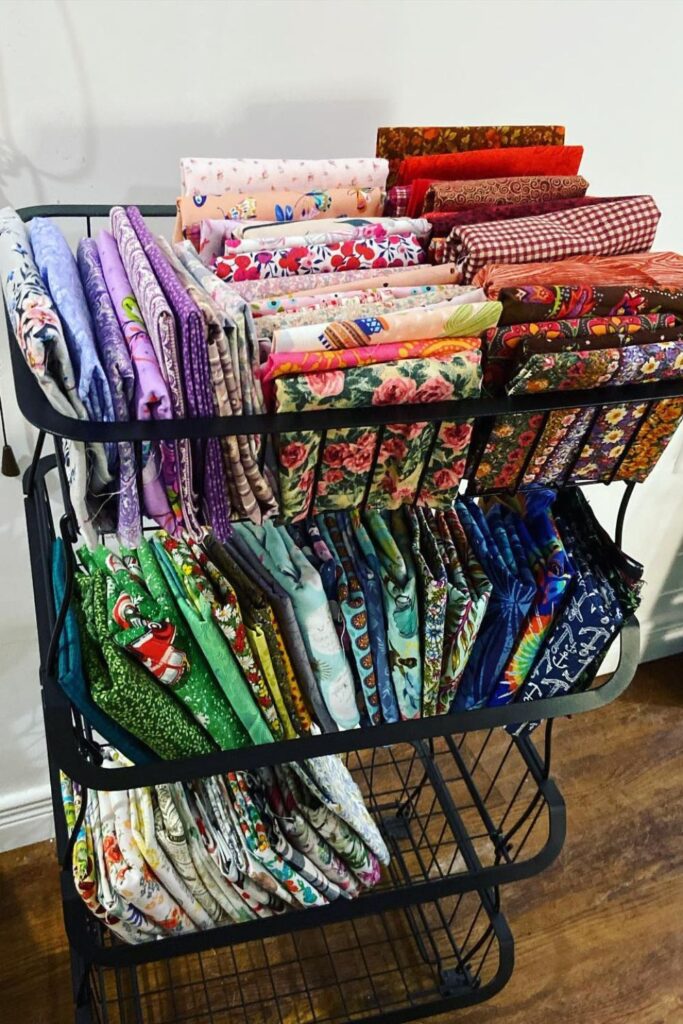
Rolling Cart System for Fabric Storage
 credit: @jessicarhae
A rolling cart system is perfect if your fabric collection is always on the move—literally. This setup is ideal for crafters who like flexibility and quick access without committing to permanent shelving. The open-wire design makes it easy to see every fabric piece at a glance, which is surprisingly helpful when you’re mid-project and need inspiration fast.
Here, fabrics are folded vertically and arranged by color or theme, creating a visually pleasing and highly functional layout.
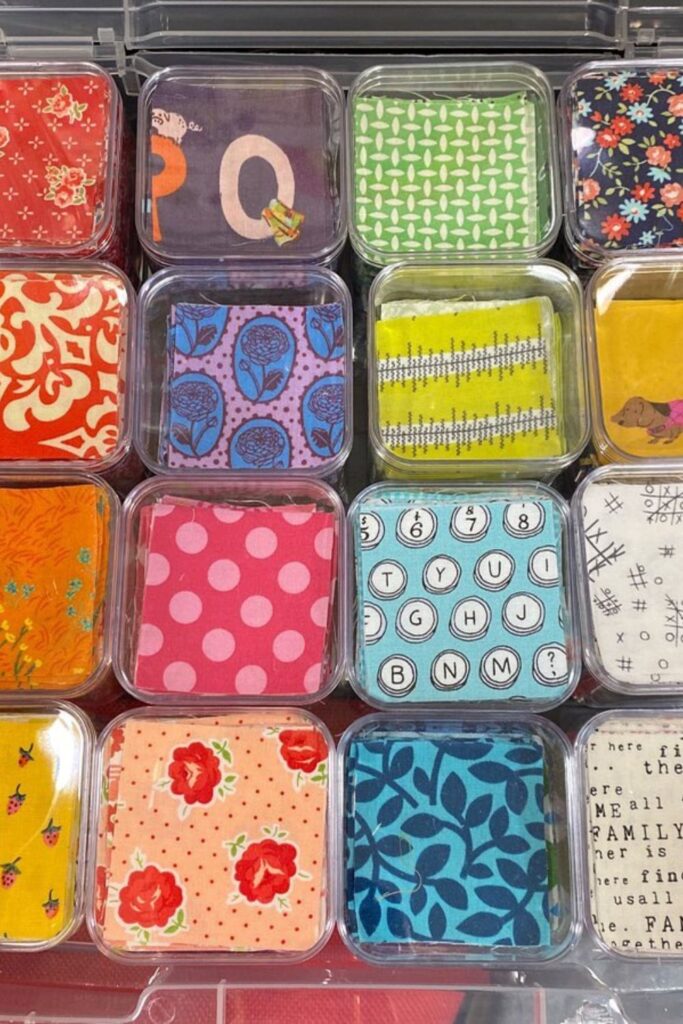
Tiny Fabric Cubes for Small Scraps
 credit: @craftycjaeger
Tiny fabric cubes are proof that even the smallest scraps deserve a proper home. This storage method is ideal for fat quarters, charm squares, and leftover pieces that usually end up scattered across drawers. Instead of becoming clutter, these small cuts turn into an organized, colorful grid that’s incredibly satisfying to look at.
Each clear cube holds neatly folded fabric pieces, making it easy to spot patterns instantly. No digging, no unfolding piles—just grab what you need.
Why Fabric Storage Matters More Than You Think
Before we jump into the ideas, let’s talk about why fabric storage is more than just “keeping things tidy.” Proper storage helps prevent wrinkles, fading, dust buildup, and even moisture damage. Plus, when you can actually see your fabric collection, you’re far more likely to use what you already own instead of buying more (we all know how tempting that is).
Things to Consider Before Organizing Your Fabric
Not all fabric collections are the same. Before choosing storage solutions, think about the type of fabrics you own, how often you use them, and how much space you realistically have. Lightweight cottons, heavy upholstery fabrics, and delicate silks all need slightly different handling. Planning this step first will make the rest of the process much smoother.
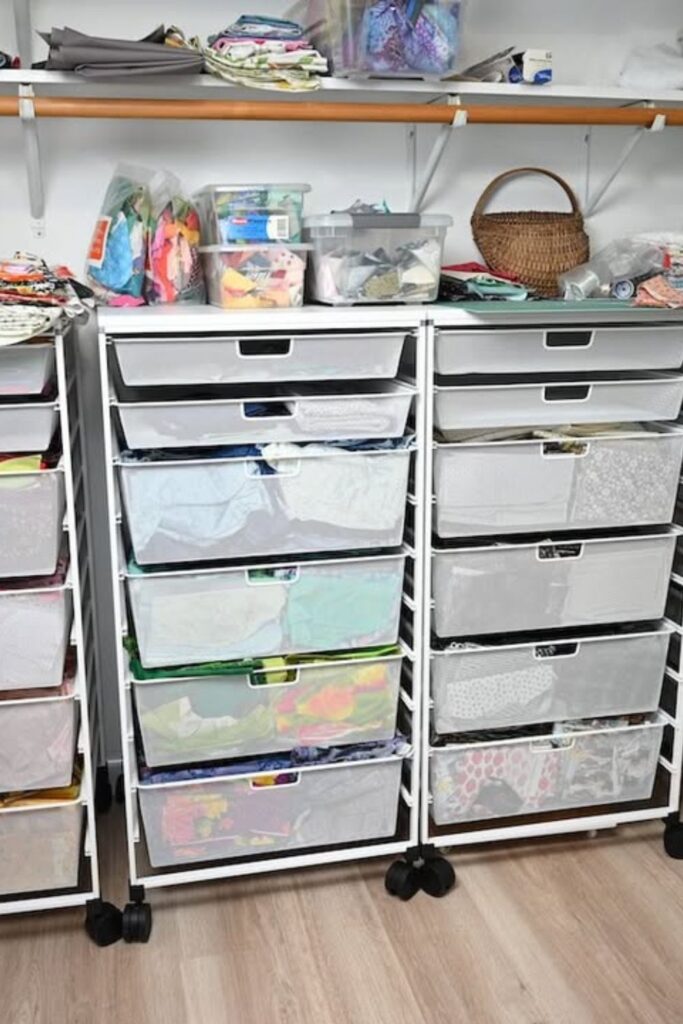
Mesh Drawer Towers for Fabric Storage
 credit: @createwhimsy
Mesh drawer towers are a smart solution for anyone who loves structure but still wants visibility. These drawers offer the best of both worlds: contained storage with enough transparency to see what’s inside. They’re especially useful for medium-sized fabric cuts and works-in-progress.
In this setup, fabrics are folded flat and sorted into shallow drawers, making it easy to pull one out without disturbing the rest. Mesh drawers allow airflow, which helps prevent musty smells—something that’s often overlooked in fabric storage.
Mini Shelf Cubes for Color-Coded Fabric Storage
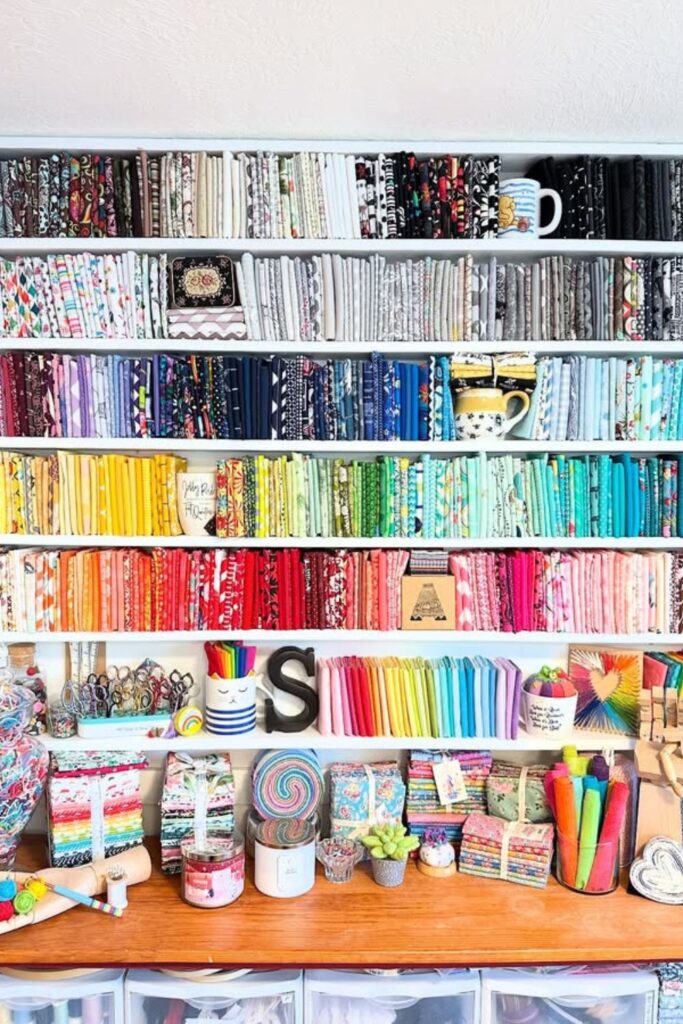 credit: @stitchedbystarlight
Mini shelf cubes create one of the most visually striking fabric storage setups, especially when fabrics are arranged by color. This system transforms your collection into functional decor, making your craft space feel inspiring the moment you walk in.
Fabrics are folded uniformly and lined up like books, allowing you to see every print and shade clearly. This vertical orientation prevents messy stacks and makes selecting fabric effortless. It’s especially useful for quilters or sewists who work heavily with color palettes.
Shelf and Drawer Combo for Fabric Organization
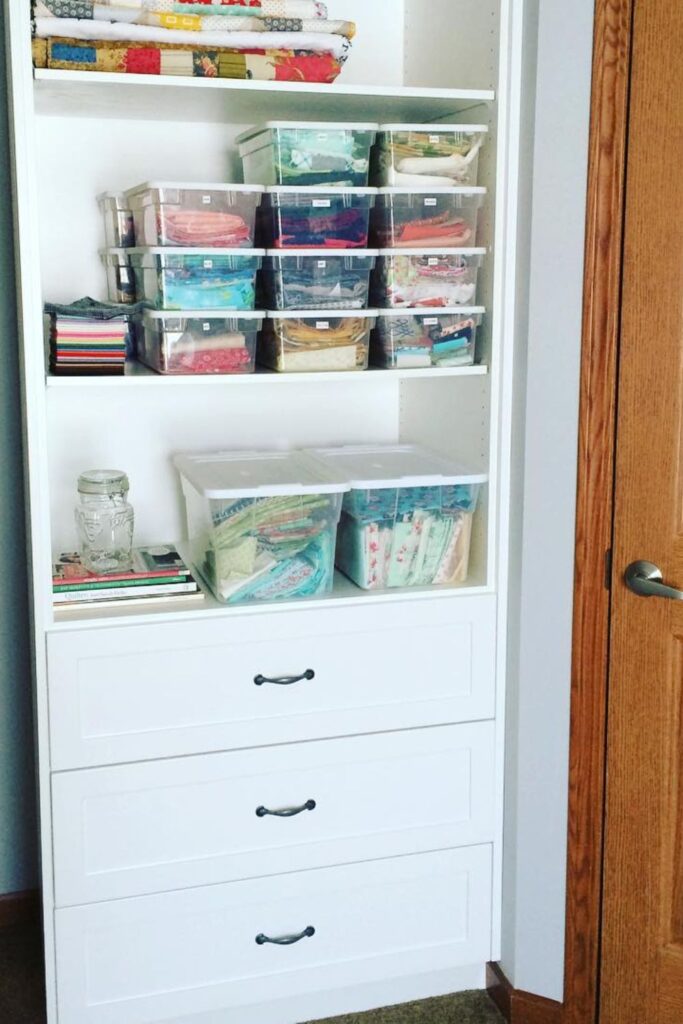 credit: @farmgirlcreationsab
A shelf-and-drawer combo offers maximum versatility for mixed fabric collections. This setup allows you to store different fabric types exactly how they need to be stored, rather than forcing everything into one system.
Open shelves are perfect for folded fabrics you use often, while drawers hide scraps, tools, or less-used materials. This balance keeps the space looking tidy without sacrificing accessibility.
Labeled Bin Racks for Large Fabric Collections
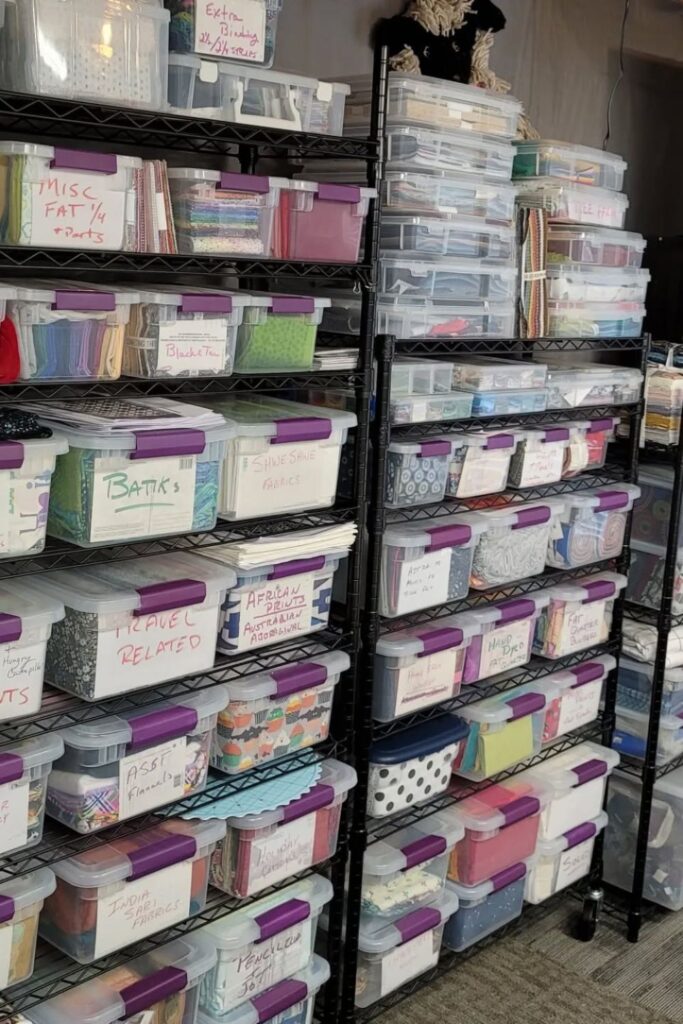 credit: @quilt_whisperer
Labeled bin racks are ideal for serious fabric collectors who need clear categorization. Each bin acts like a mini archive, storing fabrics by theme, project, or origin.
Clear bins make it easy to see contents, while labels eliminate guesswork. This is especially useful when your collection spans years and multiple styles.
Wire racks maximize vertical space and keep bins accessible. You can rearrange bins as needed, making the system flexible and future-proof.
How to Choose the Right Fabric Storage for Your Space
Your storage setup should match your lifestyle—not the other way around. Whether you’re working out of a cupboard, under the bed, or a dedicated sewing room, the best fabric storage ideas are the ones that are easy to maintain. If it’s too complicated, it won’t last (speaking from experience!).
Metal Rack Corner for Fabric Overflow
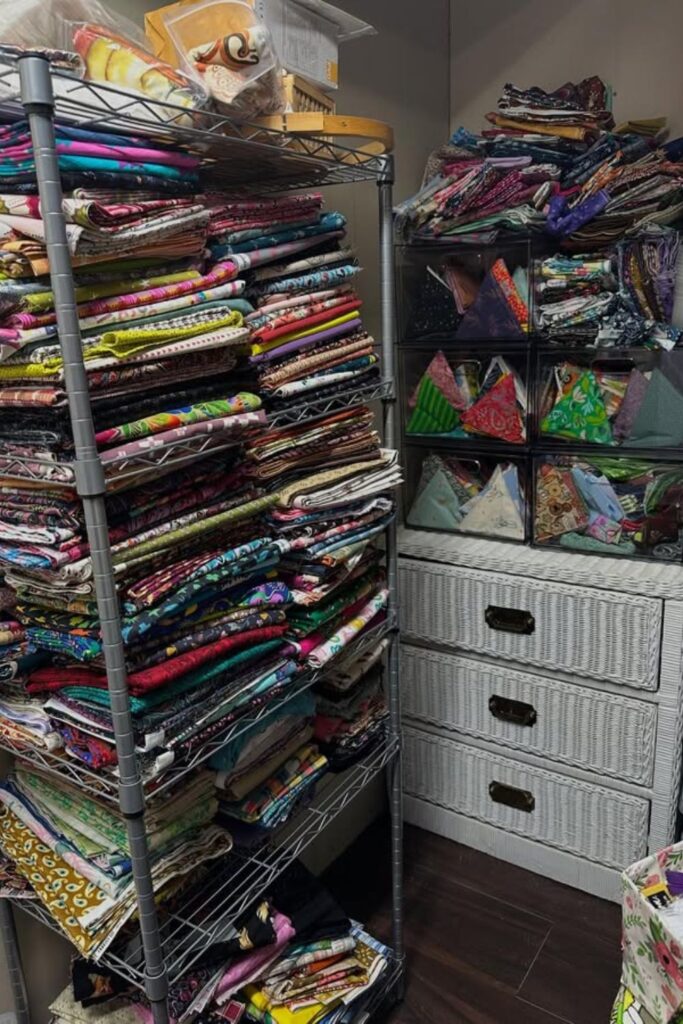 credit: @kelseastitches
A metal rack tucked into a corner is a lifesaver for overflowing fabric collections. It’s sturdy, space-efficient, and perfect for heavier stacks of fabric.
This setup prioritizes function over form, making it ideal for behind-the-scenes storage. You can stack folded fabrics or pair the shelves with bins for added structure.
It’s a great solution for basements, spare rooms, or overflow areas where durability matters most.
Basket Cube Wall for Soft Fabric Storage
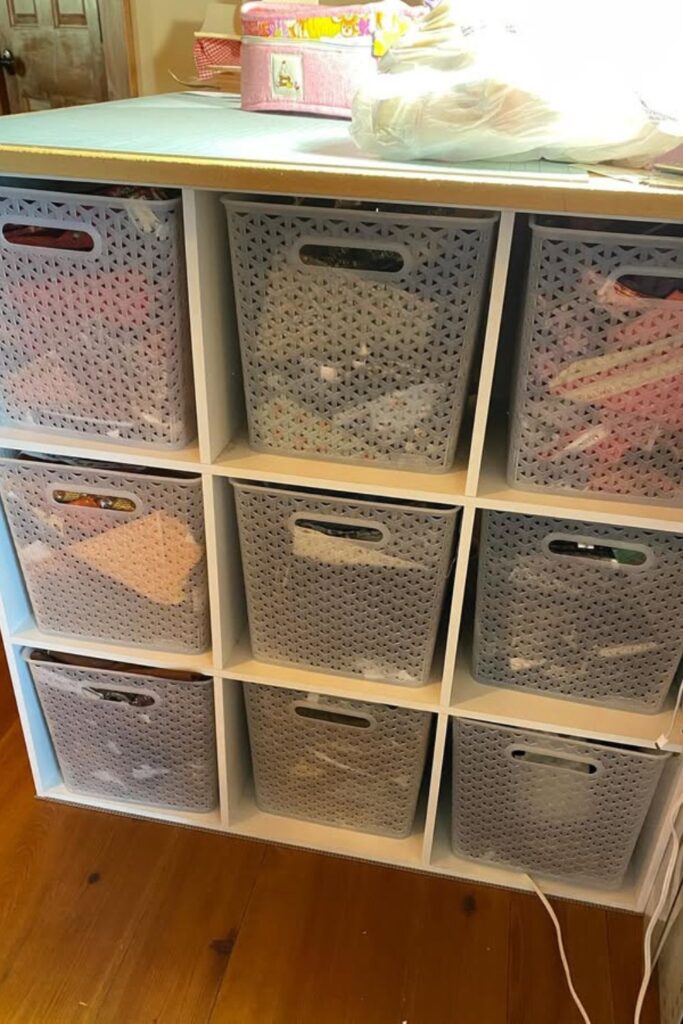 credit: @deanna_chronister
Basket cube walls offer a softer, more casual approach to fabric storage. Fabric is stored inside breathable baskets, keeping it protected yet accessible.
This setup works well in multi-purpose rooms where you want storage to blend in. Baskets add warmth and texture while hiding visual clutter.
It’s ideal for lightweight fabrics, knits, and casual sewing projects.
Cabinet Workstation Combo for All-in-One Storage
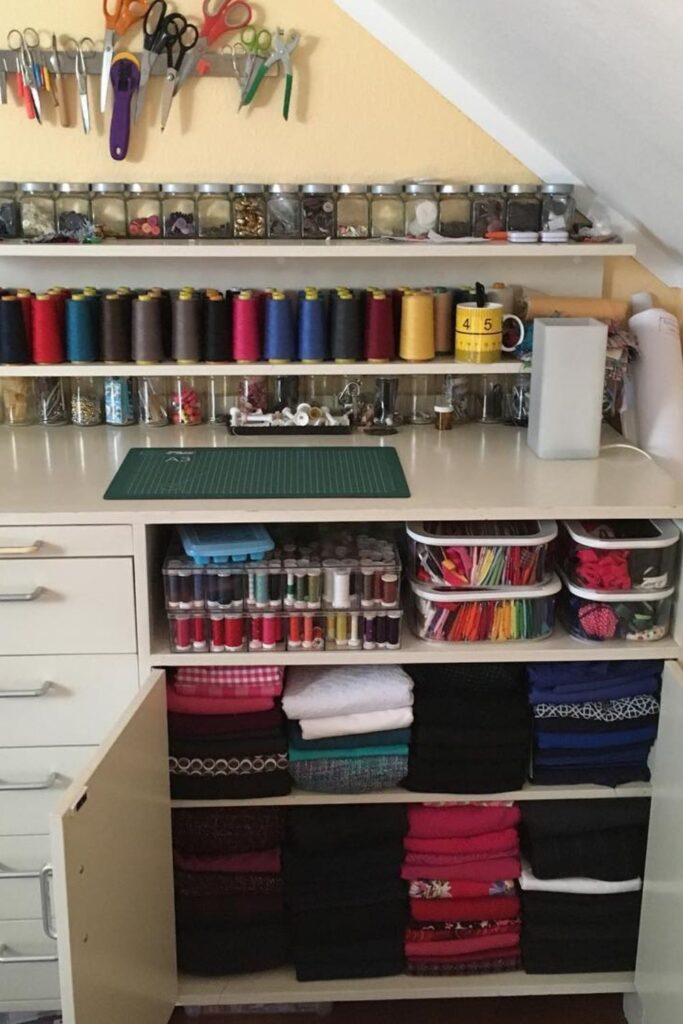 credit: @foxglovesandthimbles
A cabinet workstation combo is the ultimate all-in-one solution. Fabric storage, tools, and workspace come together in one organized unit.
Fabrics are stored below, tools above, and work happens right in the middle. This reduces setup time and keeps everything within arm’s reach.
It’s perfect for small spaces where efficiency matters most.
CONCLUSION
The best fabric storage ideas are the ones that fit your space, your habits, and your creative flow. Whether you love seeing your fabrics on display or prefer everything neatly tucked away, a simple system makes sewing more enjoyable and far less stressful.
Start with what you have, organize one section at a time, and don’t aim for perfection—aim for ease. When your fabrics are easy to find and easy to put back, you’ll spend less time organizing and more time creating.