If you’ve ever stepped on a Lego brick barefoot, you already know—Lego storage is not optional, it’s survival. When Lego sets start multiplying, the mess grows faster than you expect. One small box turns into hundreds of tiny pieces hiding under sofas, beds, and rugs like landmines waiting to strike.
The problem isn’t just clutter. Poor Lego storage leads to lost pieces, broken sets, frustrated kids, and parents who dread cleanup time. Over the years, I’ve realized that good Lego storage isn’t about fancy organizers—it’s about systems that fit real homes and real routines. Whether you live in an apartment or a house, the right setup can make Lego play fun again instead of stressful.
This guide focuses on practical Lego storage ideas that grow with your child, protect pieces, and keep your home looking sane.
Why Proper Lego Storage Matters More Than You Think
Lego storage impacts how often kids play with their sets. When bricks are mixed randomly or stuffed into bags, creativity drops. Kids spend more time searching for pieces than building, which leads to boredom and abandoned toys.
Well-organized Lego storage encourages independent play, faster cleanup, and better focus. It also teaches kids responsibility without making it feel like a chore. When storage is simple and accessible, kids are far more likely to use it.
Lego Brick Boxes That Double as Storage
 credit: @quepaquetetienda
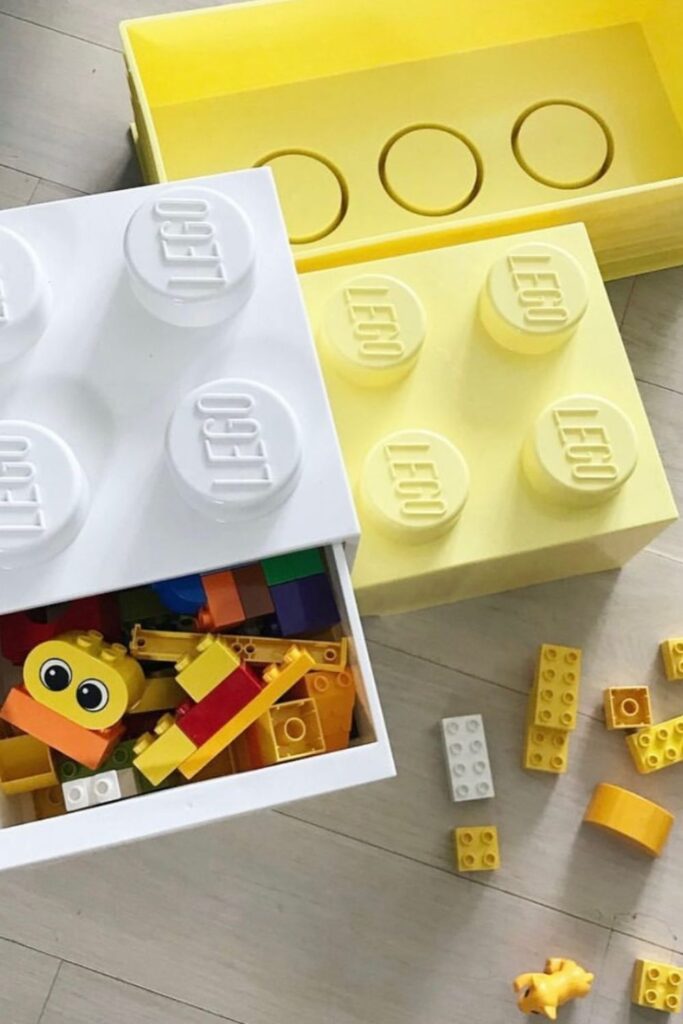
These oversized Lego-shaped boxes make cleanup feel like part of playtime. Because they look like actual Lego bricks, kids naturally treat them as toy-friendly storage rather than boring containers. The wide opening allows quick toss-in cleanup, which is realistic for daily use.
They’re especially useful for mixed bricks where detailed sorting isn’t practical. Stackable and sturdy, these boxes work well in bedrooms or living rooms without looking messy.
For parents, they’re durable, easy to clean, and visually playful. This is storage that doesn’t fight how kids play—it supports it.
Rolling Drawer Cart for Flexible Lego Play
 credit: @leftbraincraftbrain
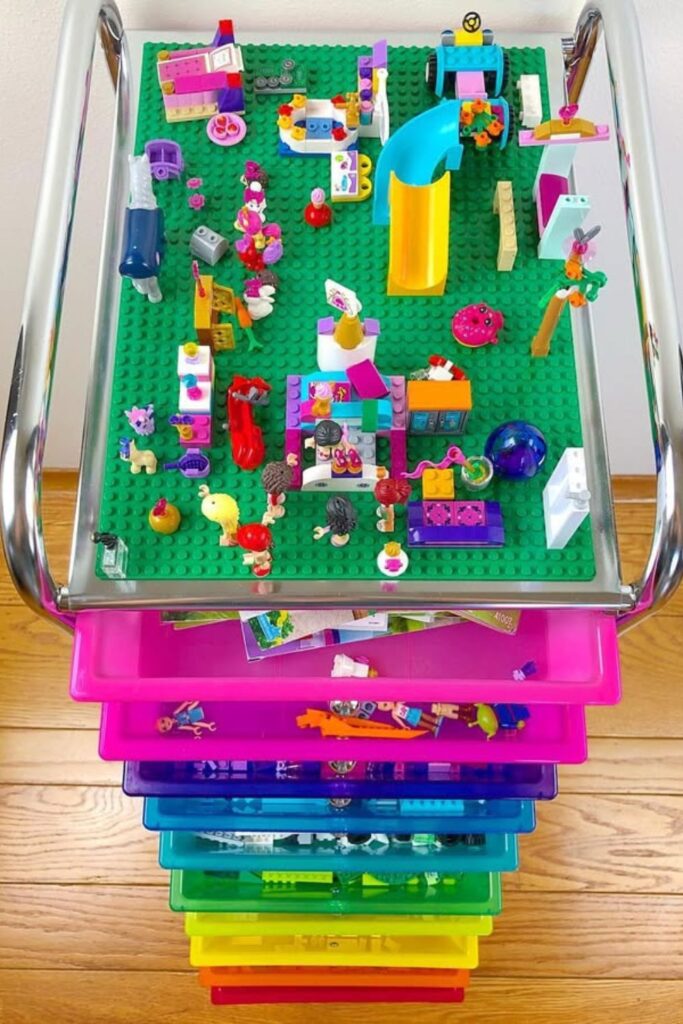
A rolling drawer cart turns Lego storage into a mobile play station. Kids can pull it beside their play area and roll it away when done, which helps contain mess.
Clear drawers make it easy to spot colors and parts without opening everything. This setup works well for frequent builders who jump between projects.
The vertical design saves floor space, while the wheels add flexibility. It’s a smart choice for small homes or shared rooms where Lego storage needs to move with the child.
Grid Wall Display for Minifigures
 credit: @photosynthetic_human1
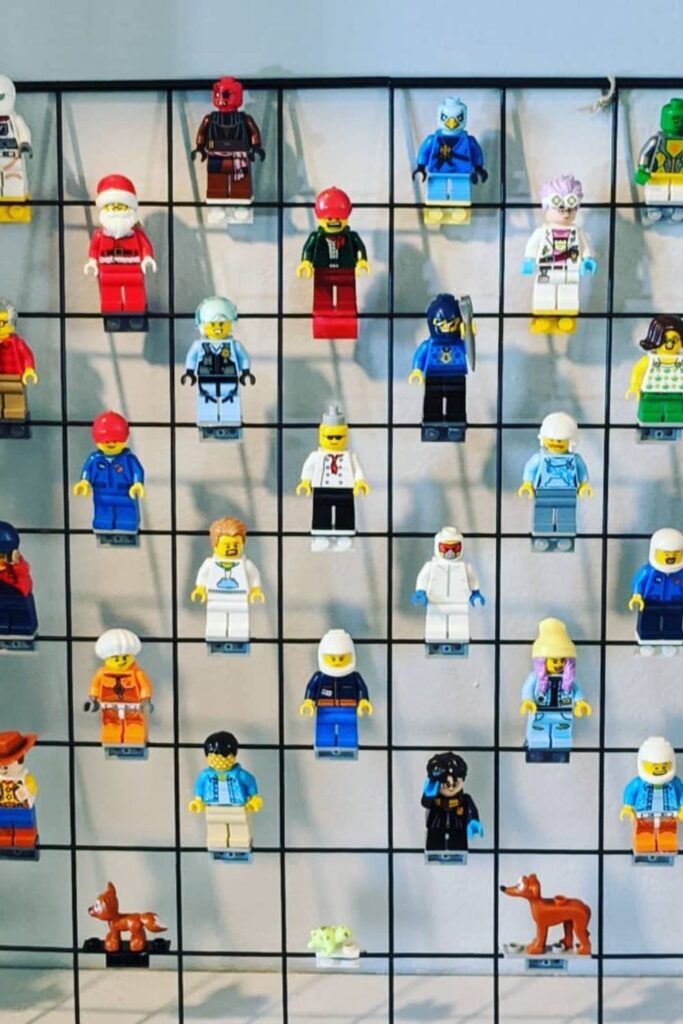
This grid wall transforms Lego minifigures into wall decor. Instead of piling figures into drawers, each character gets its own visible spot. It keeps small pieces off the floor while making them easy to access for play.
Kids love being able to see and choose characters quickly, and parents appreciate the clean, organized look. This setup works especially well for collectors or kids who enjoy storytelling.
It also naturally limits clutter—once the grid is full, figures rotate instead of multiplying.
Minifigure Baseplate Wall Display
 credit: @sortby.sarah
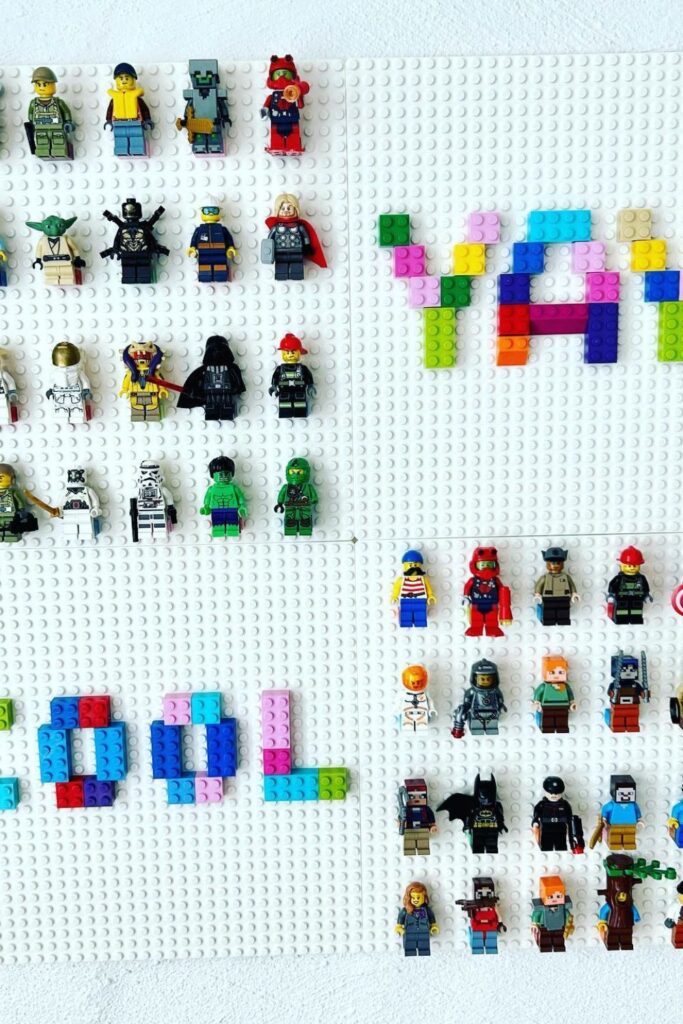
Wall-mounted baseplates create a clean, structured way to display Lego minifigures. Each figure snaps into place securely, preventing loss or damage.
This setup feels more like a gallery than storage, giving kids a sense of pride in their collection. It’s easy to rearrange characters and keeps accessories visible.
Ideal for older kids or serious Lego fans, this display frees up drawer space while turning a blank wall into a fun focal point.
Rainbow Drawer Wall for Color Sorting
 credit: @mrbookieboo
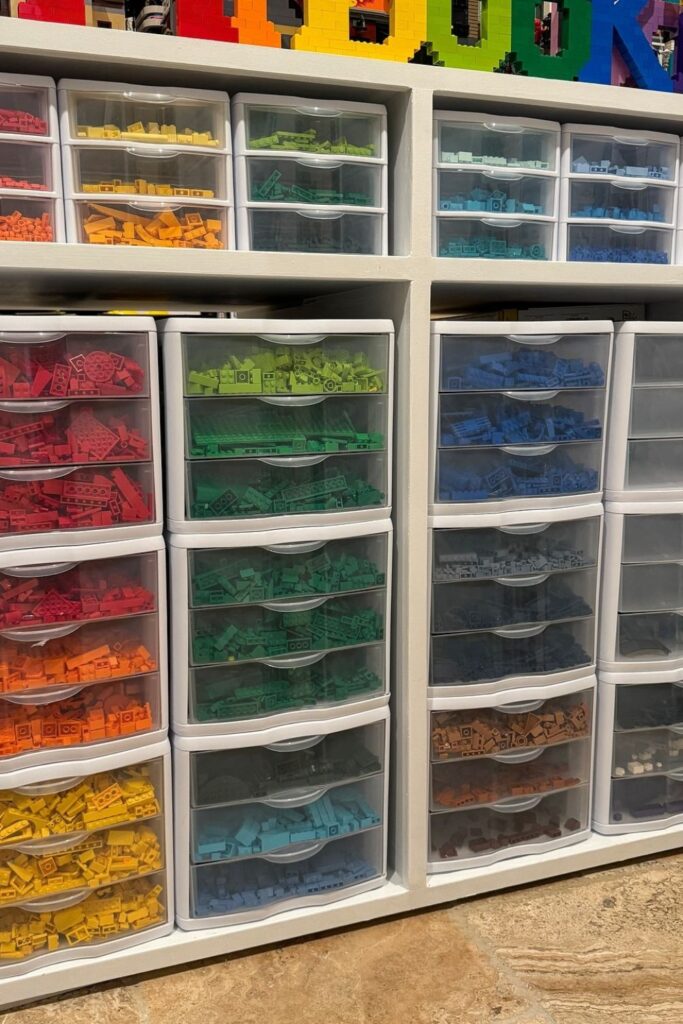
A rainbow drawer wall makes Lego organization visually intuitive. Sorting by color feels natural, especially for younger builders.
Kids can quickly grab what they need without digging through bins. The stacked vertical layout saves space and grows easily as collections expand. Beyond function, the colorful drawers look cheerful and intentional rather than cluttered.
This system works best for households where Lego is a daily activity and quick access matters more than perfect sorting.
Metal Drawer Cabinet for Advanced Builders
 credit: @theorganisedhousewife
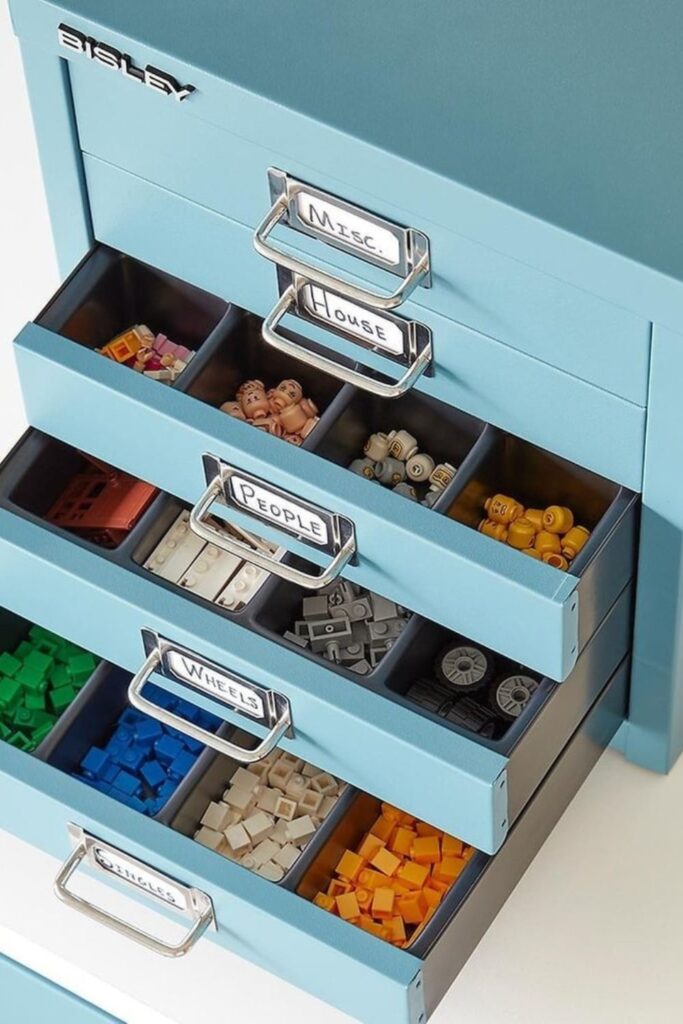
This metal drawer cabinet is ideal for serious Lego builders. Each shallow drawer keeps parts visible and prevents overfilling.
Labels make it easy to sort by type—wheels, windows, figures, or specialty pieces. The sturdy build handles heavy collections and frequent use. While it looks more utilitarian, it dramatically reduces chaos and speeds up building time.
This setup is perfect for older kids or adults who enjoy detailed builds and want long-term organization.
Labeled Bin Shelving for Easy Cleanup
 credit: @iorganisebydaniela
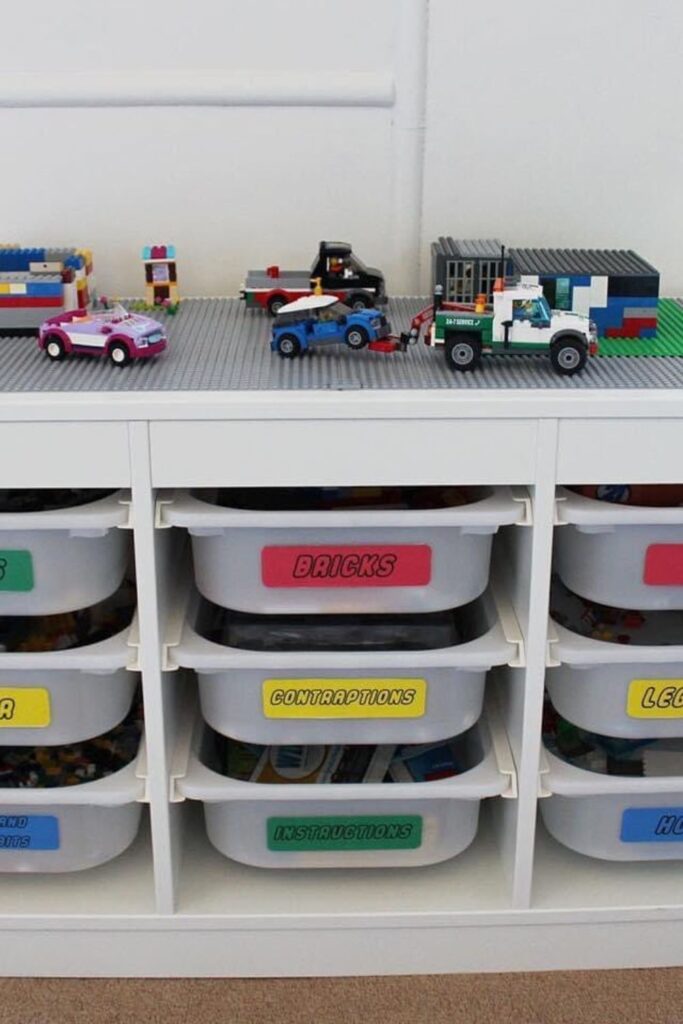
Open shelving with labeled bins makes Lego storage simple and kid-friendly. Everything is visible, reachable, and clearly marked, which encourages independent cleanup. Kids don’t need complex rules—just match bricks to labels.
The bins slide out easily for play and tuck back neatly afterward. This system works well in shared spaces because it looks organized even when full.
It’s a great balance between structure and flexibility for everyday Lego use.
Stacked Clear Bins for Visual Access
 credit: @cheapthrillsorganizing
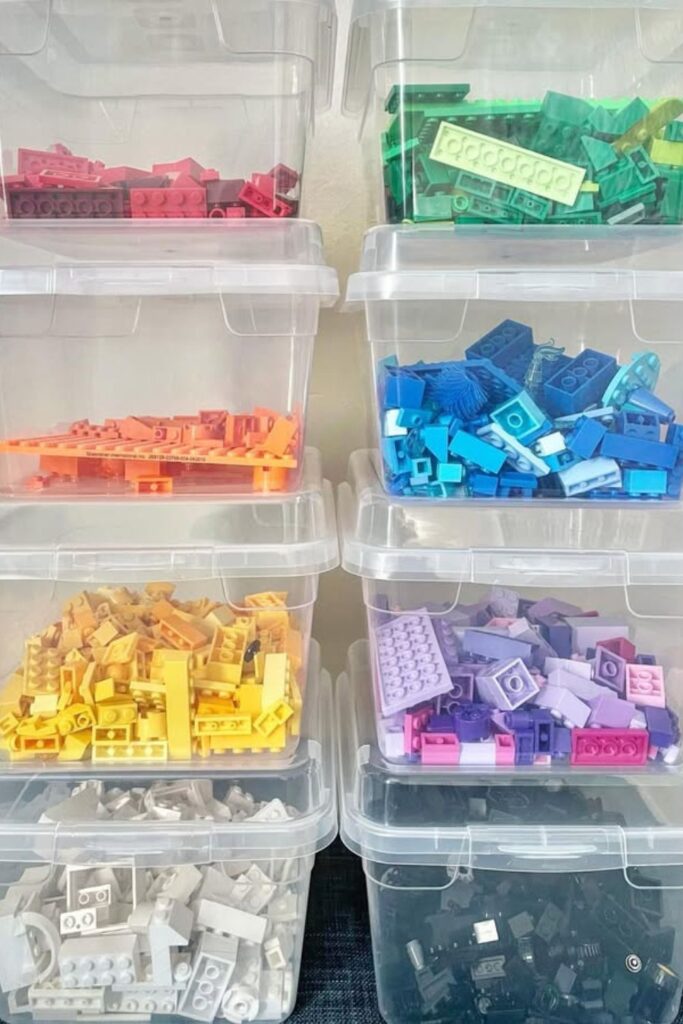
Clear, stackable bins remove the frustration of guessing what’s inside. Kids can see their pieces instantly, which speeds up both play and cleanup.
The vertical stacking keeps collections contained without taking up much floor space. These bins work well for loose sorting by color or size and adapt easily as collections grow.
Visually, the colorful bricks become part of the room’s character rather than clutter.
Divided Storage Tubs for Focused Building
 credit: @vanessa.cochrane_
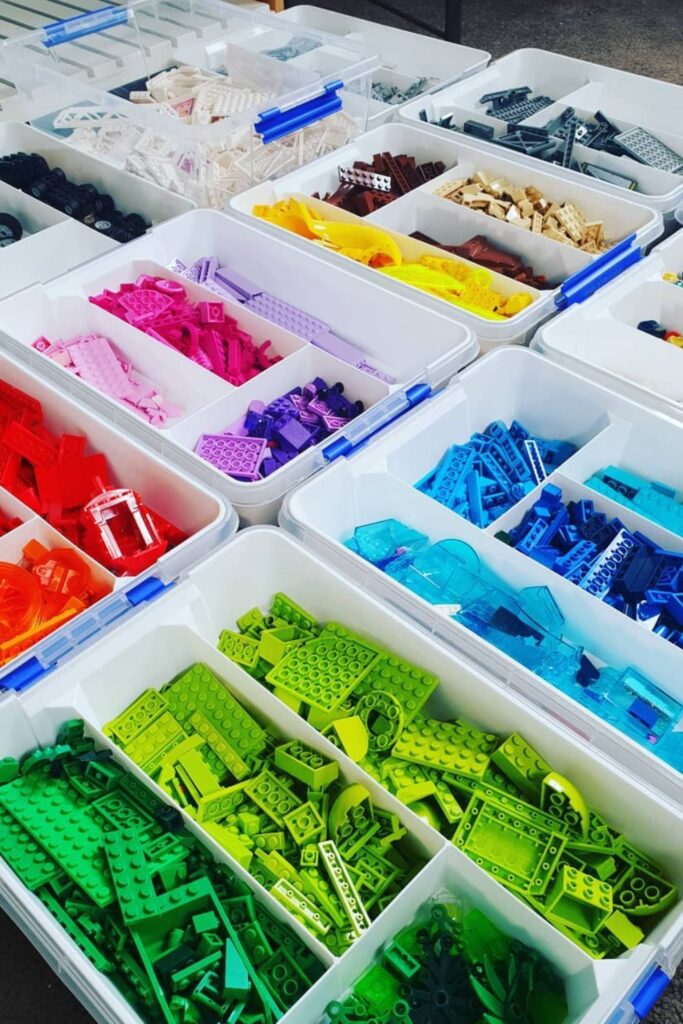
Divided storage tubs are perfect for kids who follow instructions or build complex models. Each compartment keeps parts separated, reducing search time and frustration.
The tubs are portable, making it easy to move projects from floor to table. They also stack neatly when not in use.
This setup offers just enough structure without becoming overwhelming, making it ideal for focused builders who still want flexibility.
Labeled Clear Bins for Themed Sets
 credit: @loveofplay
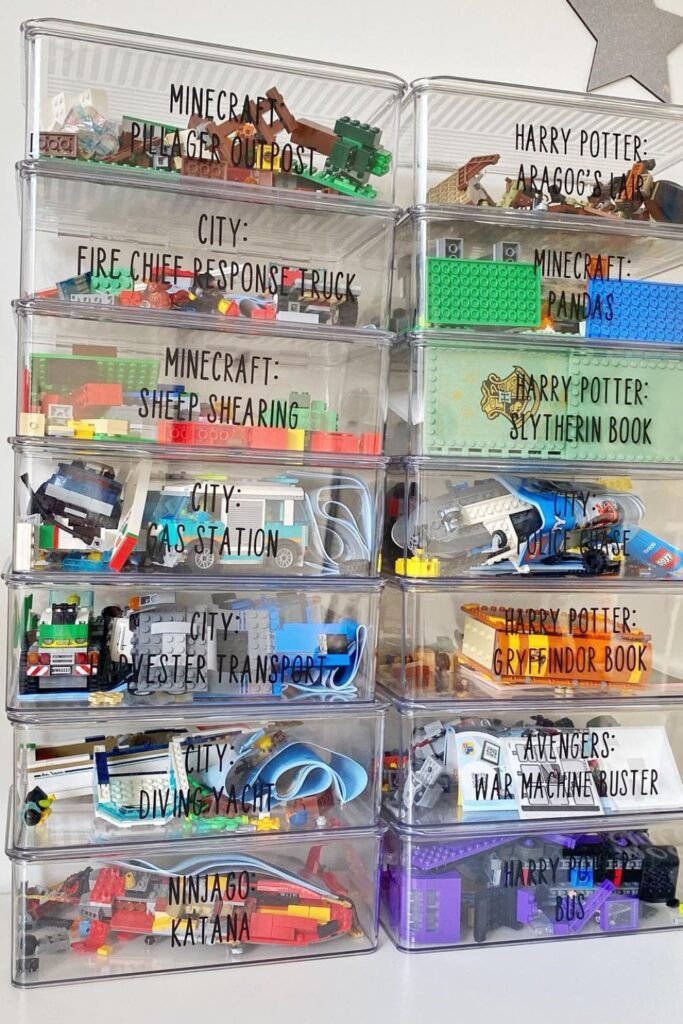
Storing Legos by theme helps kids dive into specific worlds without mixing everything together. Labeled clear bins keep sets organized while still allowing visibility.
Kids can grab one bin and start playing immediately, which reduces mess and protects builds. Cleanup becomes faster because every piece has a clear home.
This system works especially well for themed collections like city, fantasy, or movie sets.
Final Thoughts
Lego storage isn’t about creating a Pinterest-perfect playroom. It’s about making Lego play enjoyable, accessible, and stress-free for everyone in the house. The right setup saves time, protects pieces, and keeps creativity alive.
Once storage works with your lifestyle instead of against it, Legos stop feeling like clutter—and start feeling like what they’re meant to be: tools for imagination.